
 English
 簡(jiǎn)體中文











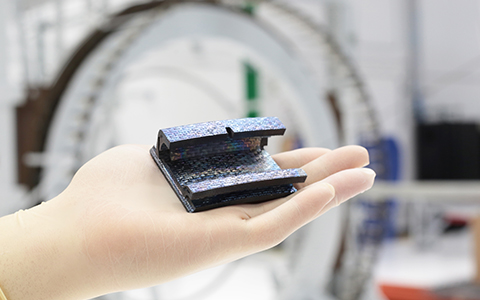
Advance3,包括約20,000個(gè)部件,已達(dá)到100多個(gè)小時(shí)的測(cè)試。初步結(jié)果顯示,由印刷技術(shù)制造的零件,即添加劑層制造(通常稱為3D打印)和陶瓷基復(fù)合材料制成的零件具有良好的性能。
ALM允許工程師為零件創(chuàng)造新的設(shè)計(jì),并使這些部件更快地被制造和重新設(shè)計(jì)。CMCs在高溫下持續(xù)時(shí)間更長(zhǎng),比金屬替代品更輕。
工程師們從去年11月開始的測(cè)試中下載了數(shù)以百萬(wàn)計(jì)的數(shù)據(jù)點(diǎn),并在7月份實(shí)現(xiàn)了發(fā)動(dòng)機(jī)的滿負(fù)荷運(yùn)轉(zhuǎn)。Advance3在提供智能引擎、勞斯萊斯對(duì)未來(lái)的愿景方面發(fā)揮著重要作用,因?yàn)樗⒃谙冗M(jìn)技術(shù)和數(shù)字能力的基礎(chǔ)上,為客戶提供了重要的利益。
民用航空航天演示項(xiàng)目總工程師艾什·歐文(Ash Owen)表示:“迄今為止,測(cè)試是完全無(wú)縫的,當(dāng)你意識(shí)到這是一個(gè)包含一系列新技術(shù)和全新核心架構(gòu)的引擎時(shí),這是一項(xiàng)杰出的成就。我們現(xiàn)在已經(jīng)完成了測(cè)試和分析結(jié)果的階段。我們喜歡從CMC和ALM部件性能中看到的。“
CMC組件能夠承受較高的工作溫度,所需的冷卻空氣要少得多,同時(shí)還能顯著減輕重量,所有這些都有助于提高效率。
ALM允許具有多個(gè)部件的更復(fù)雜的發(fā)動(dòng)機(jī)元件在更少的部件中制造,甚至作為一個(gè)完整的部件來(lái)制造,從而提高了準(zhǔn)備時(shí)間,并允許在開發(fā)階段快速、輕松地重新設(shè)計(jì)組件。勞斯萊斯在這一過(guò)程中一直處于創(chuàng)新的前沿,在2015年測(cè)試的特倫特XWB-97發(fā)動(dòng)機(jī)內(nèi)駕駛了大型3D打印的航空航天結(jié)構(gòu)。ALM還提高了生產(chǎn)效率,降低了組件的重量,同時(shí)提供了制造設(shè)計(jì)和形狀的能力,而這些設(shè)計(jì)和形狀是傳統(tǒng)方法不可能實(shí)現(xiàn)的。
Advance3演示器正在測(cè)試一種新的發(fā)動(dòng)機(jī)核心,它將提供佳的燃油效率和低排放。羅爾斯-羅伊斯未來(lái)的技術(shù)戰(zhàn)略的一個(gè)關(guān)鍵要素是為超級(jí)風(fēng)扇發(fā)動(dòng)機(jī)設(shè)計(jì)開發(fā)先進(jìn)核心,該核心將于2025年推出,與代特倫特發(fā)動(dòng)機(jī)相比,它將使燃油效率提高25%。
在演示器上,新的核心運(yùn)行在Trent XWB風(fēng)扇系統(tǒng)和Trent 1000低壓渦輪之間,其壓縮機(jī)系統(tǒng)有助于提供高達(dá)70:1的超風(fēng)扇總壓力比。
Advance3演示方案是由航空航天技術(shù)研究所(ATI)與Innovate UK和CleanSky 2聯(lián)合資助的。
原文如下:
原文如下:
The technology demonstrator engine is proving both technology and a new core for Rolls-Royce UltraFan engine design which will be available from 2025.
3D printed parts and new materials help Rolls-Royce to engine test success
Advance3, incorporating around 20,000 parts in total, has achieved more than 100 hours on test. Initial results are showing good performance from parts made by a printing technique known as additive layer manufacturing (more commonly known as 3D printing) and also made from ceramic matrix composites.
ALM allows engineers to create new designs for parts, and for those parts to be made and redesigned more quickly. CMCs last longer in high temperatures and are lighter than metal alternatives.
Engineers have downloaded millions of data points from the tests, which began last November and saw the engine achieve full power in July. Advance3 plays an important part in delivering the IntelligentEngine, Rolls-Royce’s vision for the future, as it builds on pioneering technology and digital capabilities to deliver important benefits for customers.
Ash Owen, Rolls-Royce, Chief Engineer, Civil Aerospace Demonstrator Programmes, said: “Testing so far has been completely seamless, which is an outstanding achievement when you realise that this is an engine incorporating a range of new technologies as well as a brand new core architecture. We have completed our first phase of testing and analysing the results right now. We like what we see from the CMC and ALM parts performance. ”
CMC components are able to withstand higher operating temperatures, and require much less cooling air, while delivering a significant weight reduction, all contributing to improved efficiency.
ALM allows more complex engine elements with multiple pieces to be manufactured in fewer parts or even as a single complete part, improving lead times and allowing components to be redesigned quickly and easily during the development phase. Rolls-Royce has been at the forefront of innovation with this process, flying a large 3-D printed aerospace structure within the Trent XWB-97 engine that was tested in 2015. ALM also increases production efficiency and reduces component weight while providing the ability to manufacture designs and shapes that would not be possible using conventional methods.
The Advance3 demonstrator is testing a new engine core that will deliver optimum fuel efficiency and low emissions. It is a key element in Rolls-Royce’s future technology strategy to develop the Advance core for the UltraFan engine design that will be available from 2025 and will offer a 25 per cent improvement in fuel efficiency compared with a first generation Trent engine.
On the demonstrator, the new core operates between a Trent XWB fan system and a Trent 1000 low pressure turbine, and its compressor system helps to deliver an UltraFan overall pressure ratio of up to 70:1.
The Advance3 demonstrator programme is co-funded through the Aerospace Technology Institute (ATI) in association with Innovate UK and Clean Sky 2.